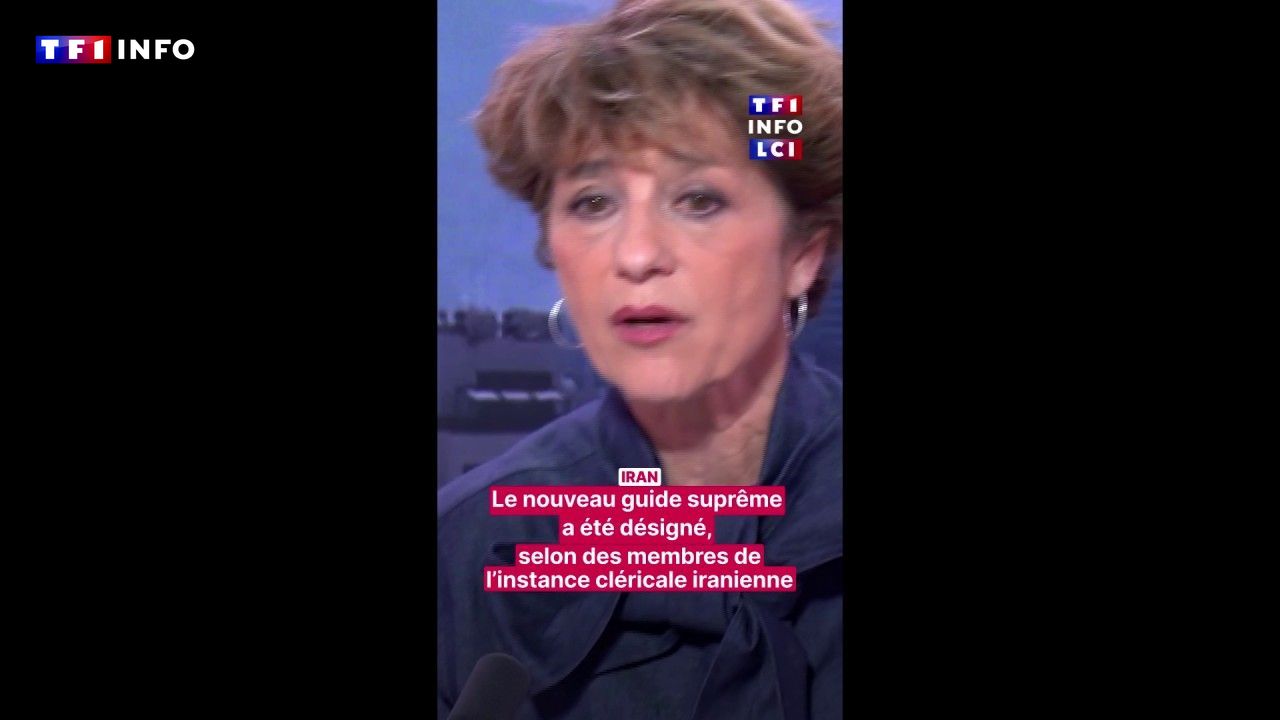
Decoding "Nouveau Guide Suprême": The Context Gap in Web Definitions
In an increasingly interconnected digital world, we often rely on instant information – a quick search, a dictionary lookup – to understand unfamiliar terms. Yet, some phrases stubbornly resist a concise, ready-made explanation. "Nouveau Guide Suprême" is a prime example of such a linguistic enigma. While each component word carries a clear definition, the aggregated phrase often presents a significant "context gap" when scrutinizing common web definitions. This article delves into why this phrase eludes simple categorization in standard online lexicons and offers strategies for uncovering its true meaning.
Our journey begins not with a direct definition of "Nouveau Guide Suprême" itself, but by understanding the individual linguistic building blocks and the inherent challenge of deriving meaning from their combination without specific contextual clues.
The Lure of the Lexicon: Deconstructing "Nouveau"
To understand "Nouveau Guide Suprême," we must first dissect its most distinctive component: "Nouveau." Originating from French, the word "nouveau" translates directly to "new." However, its application in English often carries a richer, more nuanced meaning than a simple chronological indicator.
According to various dictionary sources like The Free Dictionary, Reverso, and Collins English Dictionary, "nouveau" is defined as:
- New or modern: Indicating something recently developed, introduced, or discovered.
- Latest or fresh: Emphasizing novelty and often, a departure from tradition.
- Sometimes implying an unrefined or ostentatious quality: As seen in phrases like "nouveau riche," which describes people who have recently become rich and are often perceived as displaying their wealth in an uncultured way.
When "nouveau" precedes another noun, it typically imbues that noun with a sense of innovation, freshness, or a contemporary twist. For instance, "nouveau cuisine" refers to a style of cooking characterized by lighter, more delicate dishes and an emphasis on presentation. It signifies not just new food, but a *new approach* to food. This fundamental understanding is crucial. "Nouveau" doesn't just mean "not old"; it often implies a deliberate shift, a modern iteration, or a fresh perspective. It sets the stage for something potentially transformative or a significant update.
Assembling the Puzzle: "Guide Suprême" and the Power of Combination
With "nouveau" understood, we turn our attention to the latter part of the phrase: "Guide Suprême." Separately, these words also hold clear and potent meanings.
A "guide" can be:
- A person who shows the way, especially to a place.
- A person who leads or directs others.
- A book, manual, or set of instructions providing information or advice on how to do or understand something.
- A principle or standard that serves for direction or judgment.
"Suprême," on the other hand, is even more definitive in its implications:
- Highest in rank, authority, or quality: Suggesting ultimate power or excellence.
- Utmost or greatest: Indicating the highest degree or ultimate limit.
When combined, "Guide Suprême" immediately evokes a sense of ultimate authority, unparalleled wisdom, or definitive direction. It's not just *a* guide; it's *the* ultimate guide, the final word, the most authoritative source. This combination elevates the concept of guidance from mere direction to paramount leadership or definitive instruction. It implies an unparalleled level of quality, comprehensiveness, or definitive finality in its advisory capacity.
The Enigmatic "Nouveau Guide Suprême": Navigating the Context Gap
Now we arrive at the core challenge: understanding "Nouveau Guide Suprême" as a complete phrase. Despite the clear definitions of its individual words, a direct search for "Nouveau Guide Suprême" in standard dictionaries or general web searches rarely yields a unified, widely accepted definition. This is precisely the "context gap" our title refers to.
Why does this gap exist?
- Specificity vs. Generalization: Standard dictionaries excel at defining individual words or very common idioms. A phrase like "Nouveau Guide Suprême" is likely too specific to a particular domain, product, or conceptual framework to warrant a universal dictionary entry.
- Emergent or Niche Terminology: It might be a relatively new coinage, perhaps within a specific industry, academic field, religious movement, or even a work of fiction. New terms take time to become widely adopted and formally defined.
- Multilingual Origin: While "nouveau" is French, the entire phrase "Nouveau Guide Suprême" could be a direct translation from another language, or a phrase commonly used in a non-English speaking context, that hasn't fully permeated English discourse in a way that necessitates a dedicated entry.
- Semantic Nuance: The full meaning isn't simply the sum of its parts. "Nouveau Guide Suprême" implies a *new* ultimate guide – suggesting either an evolution of an existing supreme guide, or the emergence of an entirely novel one to address contemporary challenges. This layered meaning requires context that generic definitions cannot provide.
The absence of a ready-made definition means that researchers and curious individuals must venture beyond basic dictionary entries. They must engage in a more nuanced form of semantic detective work, piecing together clues from where the phrase appears to truly understand its intent and significance. To learn more about this challenge, consider exploring
Beyond Dictionary Entries: What's Missing on "Nouveau Guide Suprême" and
The Uncharted Territory: Defining "Nouveau Guide Suprême" Beyond Basic Terms.
Potential Interpretations and Applications
Without specific context, we can only speculate on what "Nouveau Guide Suprême" might refer to, drawing on the combined implications of its words:
*
A New Authoritative Text or Manual: In a specific field like technology, spirituality, or management, it could denote a recently published book or digital resource that is considered the definitive, ultimate authority for current practices or beliefs. For example, "The Nouveau Guide Suprême to AI Ethics."
*
An Emergent Leader or Spiritual Figure: Within certain belief systems or movements, it might refer to a newly recognized or appointed individual who is seen as the ultimate spiritual or ideological guide for a modern era.
*
A Conceptual Framework: It could represent a fresh, overarching philosophy or methodology designed to provide ultimate guidance for tackling contemporary problems, such as "The Nouveau Guide Suprême for Sustainable Living."
*
A Product or Brand Name: Less common given the grandiosity of "suprême," but it's conceivable that a high-end product, software, or service could adopt such a title to convey its cutting-edge, ultimate status.
*
A Fictional Element: In literature, gaming, or other forms of storytelling, "Nouveau Guide Suprême" could be the title of an ancient, rediscovered, or prophesied artifact or text that holds ultimate knowledge.
Each of these interpretations hinges entirely on the specific environment in which the phrase is found. The "nouveau" implies that whatever this "suprême guide" is, it's either recently created, discovered, or significantly revised to meet current needs, making it particularly relevant to the present moment.
Bridging the Gap: Strategies for Deeper Understanding
When faced with a phrase like "Nouveau Guide Suprême" that lacks a universal definition, proactive research strategies are essential. Here are some actionable tips:
- Contextual Search is Key: Instead of just searching for individual words, use precise quotation marks ("Nouveau Guide Suprême") in your search engine. This forces the search engine to look for the exact phrase, helping you find instances where it has been used.
- Identify the Source: Where did you first encounter the phrase? The surrounding text, author, publication, or domain can provide invaluable clues. Is it from an academic paper, a blog, a religious text, a product description, or a work of fiction?
- Explore Niche Databases: If the phrase seems specialized, consider searching academic databases (e.g., JSTOR, Google Scholar), patent databases, specific industry forums, or even historical archives.
- Consider Language Variations: Given "nouveau" is French, ponder if the entire phrase might be more common or directly translatable in French or other Romance languages. Searching for "Nouveau Guide Suprême" + "meaning" in French, Spanish, or Italian might yield results.
- Analyze Surrounding Semantics: Pay close attention to the words, sentences, and paragraphs immediately adjacent to "Nouveau Guide Suprême." What is it being compared to? What role does it play in the larger narrative? This linguistic context is often far more informative than a standalone definition.
- Community Inquiry: If you suspect the term belongs to a specific community or field, consider reaching out to experts or online forums dedicated to that subject. They might possess the implicit knowledge of such niche terminology.
Conclusion
The phrase "Nouveau Guide Suprême" serves as a powerful illustration of the limitations inherent in relying solely on individual word definitions, especially in the vast and rapidly evolving landscape of web information. While "nouveau" signifies something new or modern, and "guide suprême" points to ultimate authority, their combination requires specific context to unlock its true meaning. The "context gap" highlights that true understanding often lies beyond basic dictionary entries, demanding deeper research, critical analysis of usage, and a willingness to explore niche domains. By applying strategic search techniques and contextual interpretation, we can bridge this gap and decipher the intended significance of even the most enigmatic multi-word phrases.